Showing posts with label obama history. Show all posts

Saturday, March 15, 2008

The "Obama I Know"

A revealing look at Obama from University of Chicago constitutional law colleague Cass Sunstein in the Chicago Tribune. Highly recommended!

Not so long ago, the phone rang in my office. It was Barack Obama. For more than a decade, Obama was my colleague at the University of Chicago Law School.

He is also a friend. But since his election to the U.S. Senate, he does not exactly call every day.

On this occasion, he had an important topic to discuss: the controversy over President Bush's warrantless surveillance of international telephone calls between Americans and suspected terrorists. I had written a short essay suggesting that the surveillance might be lawful. Before taking a public position, Obama wanted to talk the problem through.In about 20 minutes, he and I investigated the legal details. He asked me to explore all sorts of issues: the president's power as commander in chief, the Constitution's protection against unreasonable searches and seizures, the Foreign Intelligence Surveillance Act, the Authorization for Use of Military Force and more.

Obama wanted to consider the best possible defense of what Bush had done. To every argument I made, he listened and offered a counterargument. After the issue had been exhausted, Obama said he thought the program was illegal, but now had a better understanding of both sides. He thanked me for my time.

This was a pretty amazing conversation, not only because of Obama's mastery of the legal details, but also because many prominent Democratic leaders had already blasted the Bush initiative as blatantly illegal. He did not want to take a public position until he had listened to, and explored, what might be said on the other side.

This is the Barack Obama I have known for nearly 15 years -- a careful and evenhanded analyst of law and policy, unusually attentive to multiple points of view.
Here's another excerpt, read the whole thing here:
The Obama we know is no rhetorician; he shines not because he can move people, but because of his problem-solving abilities, creativity and attention to detail.

In recent weeks, his speaking talents, and the cultlike atmosphere that occasionally surrounds him, have led people to wonder whether there is substance behind the plea for "change" -- whether the soaring phrases might disguise emptiness and vagueness. But nothing could be further from the truth. He is most comfortable in the domain of policy and detail.

I do not deny that skeptics are raising legitimate questions. After all, Obama has served in the U.S. Senate for a short period (less than four years) and he has little managerial experience. Is he really equipped to lead the most powerful nation in the world?

Obama speaks of "change," but will he be able to produce large-scale changes in a short time? What if he fails? An independent issue is that all the enthusiasm might serve to insulate him from criticisms and challenges on the part of his advisers -- and, in view of his relative youth, criticisms and challenges are exactly what he requires.

Fortunately, the candidate's campaign proposals offer strong and encouraging clues about how he would govern; what makes them distinctive is that they borrow sensible ideas from all sides.

He is strongly committed to helping the disadvantaged, but his University of Chicago background shows he appreciates the virtues and power of free markets. He is not only focused on details but is also a uniter, both by inclination and on principle.
Keep Reading (if there's more)...

Thursday, March 6, 2008

Worth Revisiting

I read this before I was blogging, but Nicholas Kristof had a great column dissecting the role "experience" actually plays in presidential successes, and in terms of Obama and Clinton. Read the whole thing!

It might seem obvious that long service in Washington is the best preparation for the White House, but on the contrary, one lesson of American history is that length of experience in national politics is an extremely poor predictor of presidential success.


Looking at the 19 presidents since 1900, three of the greatest were among those with the fewest years in electoral politics. Teddy Roosevelt had been a governor for two years and vice president for six months; Woodrow Wilson, a governor for just two years; and Franklin Roosevelt, a governor for four years. None ever served in Congress....
...The Democrats with the greatest Washington expertise — Joe Biden, Chris Dodd and Bill Richardson — have already been driven from the race. And the presidential candidate left standing with the greatest experience by far is Mr. McCain; if Mrs. Clinton believes that’s the criterion for selecting the next president, she might consider backing him.

To put it another way, think which politician is most experienced today in the classic sense, and thus — according to the “experience” camp — best qualified to become the next president.

That’s Dick Cheney. And I rest my case.
Keep Reading (if there's more)...

Saturday, February 23, 2008

Mission Accomplishment

Earlier in the week, I posted and posted again about Obama and Clinton's actual legislative achievements in the US Senate. This Washington Post looks at Obama's record in the Illinois Senate, Judge Him By His Own Laws:

People who complain that Barack Obama lacks experience must be unaware of his legislative achievements. One reason these accomplishments are unfamiliar is that the media have not devoted enough attention to Obama's bills and the effort required to pass them, ignoring impressive, hard evidence of his character and ability.
The article focuses several achievements, especially a bill Obama championed to videotape police interrogations to stop the beatings of suspects, a bill in which he faced strong Republican and police opposition, and succeeding in winning them over and passing it 35 to 0.
Taken together, these accomplishments demonstrate that Obama has what Dillard, the Republican state senator, calls a "unique" ability "to deal with extremely complex issues, to reach across the aisle and to deal with diverse people." In other words, Obama's campaign claim that he can persuade us to rise above what divides us is not just rhetoric.
UPDATE: The NY Times has this helpful chart about Obama's Illinois Senate Record (where he introduced over 800 bills). Keep Reading (if there's more)...

Thursday, February 21, 2008

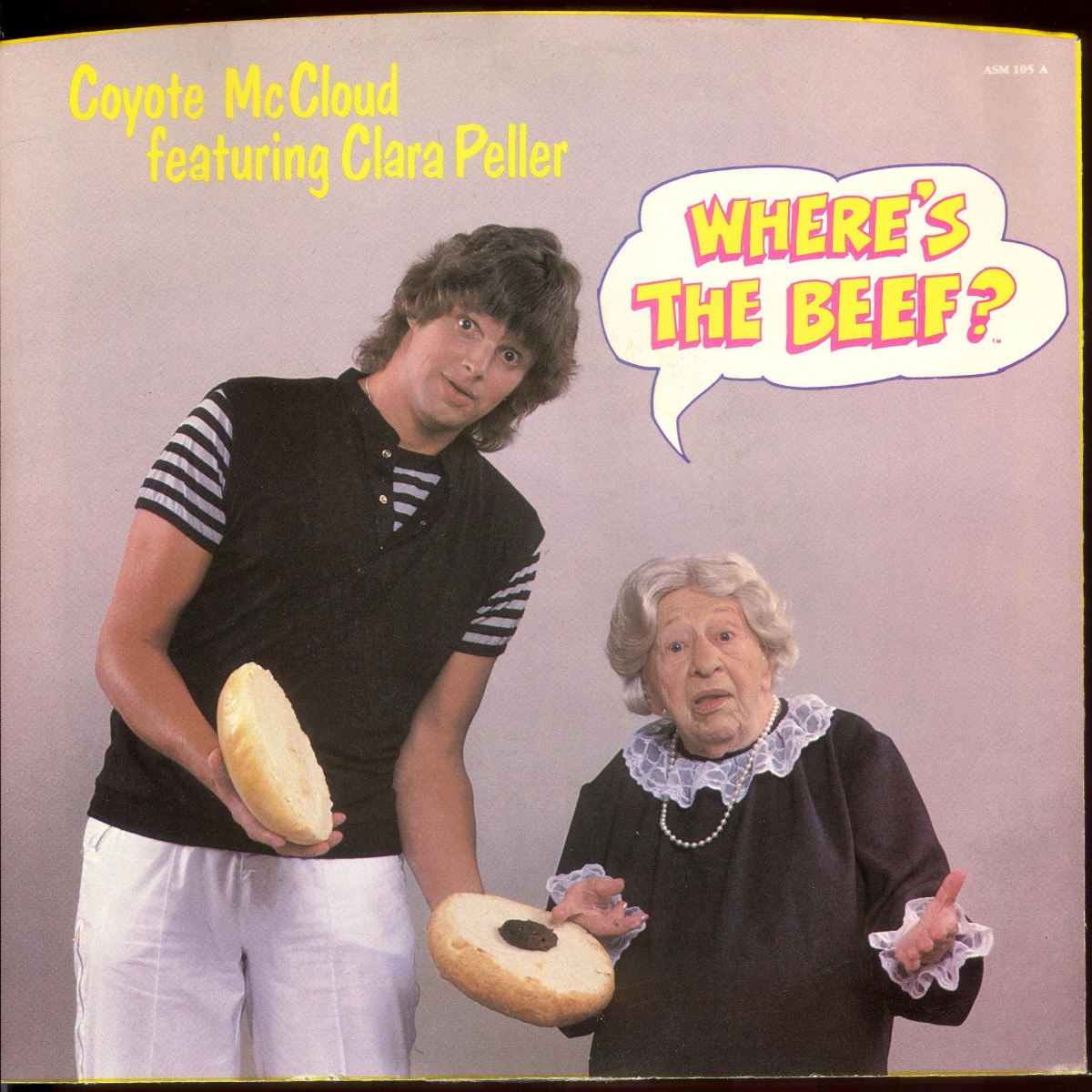
More Beef


The experience/accomplishment question has produced some very interesting and valuable information about Obama's actual Senate record -which some find to be more substantive than Hillary Clinton's - turning her experience argument on its head.

Others have been doing their own digging. In "I Refuse to Buy Into the Obama Hype (now a supporter)" a mother explains her own investigation, not trusting the Obama hype, but not in love with Hillary either:

I came away from my research really knowing a lot more about what is important to Hillary in her heart: kids and their well being. My research changed my feeling about her significantly. About 40% of her bills dealt with health care and/or kids. As a mom with small kids, I like her passion for children's issues...But most of her other bills are much smaller in scale and scope — more targeted and more careful.
She compares bills by both senators dealing with lead paint:
The difference is in the scope and the approach...Obama's bill shows how he thinks big: do everything we can to make sure that lead-painted Thomas the Tank Engine toys don't get into the hands and mouths of millions of toddlers in this country. Or Hillary: encourage people by offering tax credits to clean up lead paint in old buildings. People have been talking about lead paint in old buildings hurting kids in living in inner cities, since, well when I was a kid — for decades. If it is still a big problem, is offering tax credits for clean up, i.e. scrape down the walls and repaint, the best way to protect kids from lead? How many of you parents have lead paint problems? How many have (or had) toxic Thomas the Tank Engine Toys ...Obama's bills risk pissing off the toy industry and the Chinese. Hillary's risks nothing.
And her further research into Obama, which changed her mind:
...I was blown away as I started going through his record. I've already mentioned his bills on health care and energy. In addition he had introduced bills on Iran, voting, veterans, global warming, campaign finance and lobbyists, Blackwater, global poverty, nuclear proliferation, and education.
Another entry from another Kossack "I Found the Beef" provides these numbers about Obama's Senate record:
Senator Obama has sponsored or co-sponsored 570 bills in the 109th and 110th Congress.
Senator Obama has sponsored or co-sponsored 15 bills that have become LAW since he joined the Senate in 2005.
Senator Obama has also introduced amendments to 50 bills, of which 16 were adopted by the Senate.
Of the bills he introduced:
Most of his legislative effort has been in the area of Energy Efficiency and Climate Change (25 bills), health care (21 bills) and public health (20 bills), consumer protection/labor (14 bills), the needs of Veterans and the Armed Forces (13 bills), Congressional Ethics and Accountability (12 bills), Foreign Policy (10 bills) Voting and Elections (9 bills), Education (7 bills), Hurricane Katrina Relief (6), the Environment (5 bills), Homeland Security (4 bills), and discrimination (4 bills).
As this poster writes "Next time someone asks you "where's the beef" in Senator Obama's Senate record, please feel free to send the link to this diary."
Keep Reading (if there's more)...

Wednesday, February 20, 2008

Fun with Legislation!

Blog Obsidian Wings has done everyone a great service: they've actually gone through and catalogued legislation and amendments that both Obama and Clinton have been responsible for in their years in the US Senate. Its a useful reference.

But beyond that, the blog also contains some analysis about Obama's record. Here's some excerpts:

...I follow some issues pretty closely, and over and over again, Barack Obama kept popping up, doing really good substantive things. There he was, working for nuclear non-proliferation and securing loose stockpiles of conventional weapons, like shoulder-fired missiles. There he was again, passing what the Washington Post called "the strongest ethics legislation to emerge from Congress yet" -- though not as strong as Obama would have liked. Look -- he's over there, passing a bill that created a searchable database of recipients of federal contracts and grants, proposing legislation on avian flu back when most people hadn't even heard of it, working to make sure that soldiers returning from Iraq and Afghanistan were screened for traumatic brain injury and to prevent homelessness among veterans, successfully fighting a proposal by the VA to reexamine all PTSD cases in which full benefits had been awarded, working to ban no-bid contracts in Katrina reconstruction, and introducing legislation to criminalize deceptive political tactics and voter intimidation.
On his bipartisanship:
...all this bipartisanship stuff sounds very nice, but how do we know it actually works? Isn't this just happy talk that will evaporate in the face of reality? Or, alternately: doesn't this sort of thing involve selling our souls to our supposed partners in compromise? Curiously, Obama has an actual legislative record, and so it is possible for us to see both how he approaches bipartisan cooperation and what results it yields. And it turns out that Obama does achieve results by working with Republicans, and doesn't tend to compromise on core principles....Obama tries to find people, both Democrats and Republicans, who actually care about a particular issue enough to try to get the policy right, and then he works with them. This does not involve compromising on principle. It does, however, involve preferring getting legislation passed to having a spectacular battle.
And also contains a great rundown of his policies pushing greater transparency and accountability in government. Check it!

ALSO: This discussion of Hillary's record of "solutions":
...I don't see any significant legislation with her name on it...I don't see any accounts describing how she worked vigorously behind the scenes to further progressive goals - particularly on national security matters...in looking at her accumulated "solutions," I'm not seeing much. And that, of course, is the larger problem. Obama and Clinton's policies are pretty much the same - and they're both smart, capable candidates. The question is which one is actually going to stick out his or her neck to fight for, as they say, solutions. To me, the best evidence of future willingness to "solve" comes from past behavior. And "fighting for solutions" is not exactly how I'd characterize her 7+ years in the Senate. "Ostentatious centrism in preparation for a general election" seems closer to the mark.
Keep Reading (if there's more)...

Saturday, February 16, 2008

Presence


This has already been explained a few times, but it keeps cropping up in attacks on Obama: here's a little article from the NY Times - explaining Obama's "present" votes as a state senator (from another state senator):

Senator Barack Obama was not ducking his responsibility in the Illinois Senate when he voted “present” on many issues...In the Illinois Senate, there can be strategic reasons for voting “present” rather than simply no. A member might approve the intent of legislation, but not its scope or the way it has been drafted. A “present” vote can send a signal to a bill’s sponsors that the legislator might support an amended version. Voting “present” can also be a way to exercise fiscal restraint, without opposing the subject of the bill. Mr. Obama was an outspoken member of the Illinois Senate, and not someone known for dodging questions, whether they were on ethics, police responsibility, women’s choice or any other hot-button issue.
Keep Reading (if there's more)...

Sunday, January 27, 2008

Obama Endorsed by a Paper that Knows Him (with some words for Hillary)

His home paper, the Chicago Tribune:

"Obama can help this nation move forward. A Tribune profile last May labeled his eight years in Springfield as "a study in complexity, caution and calculation. In the minority party for all but his final two years in the Statehouse, he tempered a progressive agenda with a cold dash of realism, often forging consensus with conservative Republicans when other liberals wanted to crusade."

And reminds us Clinton is ever the triangulator, and was for the war until she realized (in a Democratic primary) she had to be against it.

ALSO: a Seattle Times endorsement Keep Reading (if there's more)...